BEYOND THE SURFACE
Identities are shaped in various different ways. Internal and external factors come into play when constructing someone’s identity. Personal experiences, cultural background, family influence, thoughts and mindsets are some of the fundaments that sustain individual identities.
Moreover, at first glance, human interactions are done at a surface level. When meeting someone new, one only learns about their exterior facet, however, there is much more to individuals. Identity is just like an iceberg. The tip of the iceberg is what we usually know about these people we come across throughout our life journey, and the rest of the iceberg, which represents the vast majority, is normally hidden and just let out when closer relationships and deeper connections are created.
People tend to judge others the moment they meet each other. Prejudices exist, and they are used to create an image of a person, consciously and unconsciously. Most of the time, people get used to using these prejudices and don’t even try to actually get to meet the person. These prejudices make individuals be encapsulated in an idea of them that may or may not be true, and because of their surrounding’s perspective of them, some of their dreams and objectives could not be achieved.
One never knows what is behind a person. One never knows what is beyond the surface of people’s identities. This is why this exhibition’s aim is to show some people’s thoughts, beliefs or experiences that others in their surroundings may have not known because they are only known on a surface level.
We are all artists, the artists of our own lives. It depends on us, whether we shape our identity in one way or another. It depends on us whether we portray our thoughts, beliefs and life experiences, or we keep them to ourselves. It depends on us whether we scream outloud who we feel we are, or we keep it to ourselves. It depends on us whether the tip of the iceberg is bigger or smaller.
Within this exhibition, different identity aspects of different artists, famous or not, will be shown and explained. Moreover, some of these identity aspects are sometimes portrayed into something physical, and those cases, will also be displayed in this exhibition.
BEYOND STEREOTYPES
The people shown below, are “personal artists”. Everything they work on is themselves. Even if they did not create something tangible to portray who they are, they are creating themselves. They are creating their identity.
They were categorized, at least once, because of their age, looks or nationality. However, they are more than that. They have a lot to offer and discover that most people do not know, because some people base their knowledge about something or someone, on how they look like, or first impressions. What these people have to offer to the world, is beyond the stereotypes.

ASJA DABAUT
BELGIUM, 35
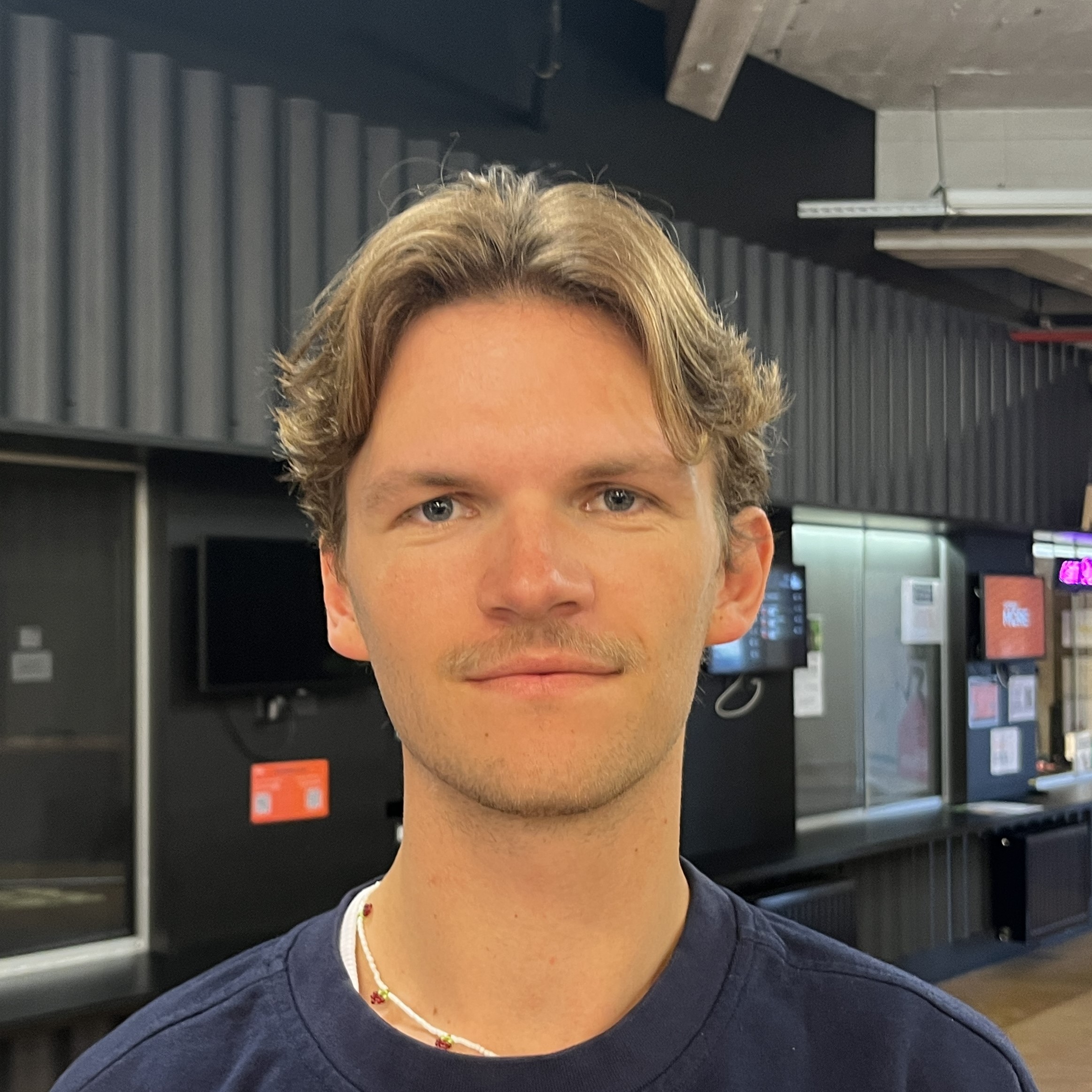
OVE BRANDT
GERMANY, 24

“Ten years ago I took a one-year solo backpacking trip, facing my introverted nature. It helped me go from a very protected upbringing to discovering the world on my own.”

“I am a theatre kid who likes performing. I wrote a musical that performed in theatres around Germany, starring over 70 people, and appeared in two Netflix movies.”

MAITE MÜLLER
BELGIUM, 21

PAULA RODRIGUEZ
SPAIN, 25

“I love Harry Potter. If I may choose the topic for a paper I either choose a world issue or Harry Potter. I’m many things, and a proud potterhead is definitely one of them.”

“I was always unconsciously in love with fashion. When I went to highschool I wanted to do history, and now I work as a stylist and tattoo artist.”
BEYOND BRUSHTROKES
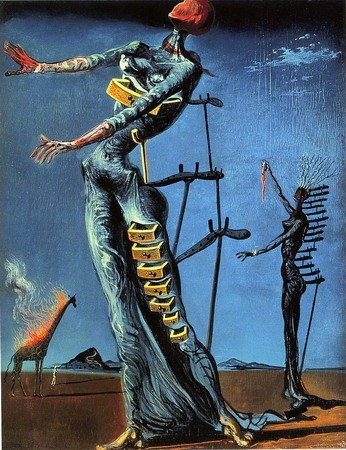
Jirafa en llamas, Salvador Dalí (1936). This painting was painted by a Spanish surrealist artist who always portrayed his dreams and thoughts into his artworks. This is the way how Dalí perceived life and the world surrounding him. This is the way how Dalí expressed his identity to the world. In this case, “Burning jiraffe” the different elements of the painting represent a different thought that Dalí wanted to express. For example, the drawers represent a form of entering someone’s subconsciousness. In his case, they were always open, because he was very transparent of who he was.

Untitled, Christopher Quirk (2020). This abstract painting was painted by an American painter, who is also a writer and filmmaker. Quirk always reflects his life experiences into abstract artworks. In this case, he was going through a period of doubt. A period where he was doubting about himself, his purpose in life and also, his doubt regarding his art. Whilst having all this doubts and questions being raised and disorganising all his life, Quirk found out that in Zen there is a concept called tripod that explains that faith, doubt and persistence support each other. Because of this discovery, doubts became peace and had a logic sense in his life. This period of doubt helped him find a new mindset that he still applies nowadays.
BEYOND CHISELS

In process, Elena Rodriguez (2021). This sculpture was made by 17-year-old me. It represents the creation of an identity. Individuals’ identities are in constant creation, from the day they are born until the day they die. With this artwork I intended to showcase that one’s identity is never fully finnished. The moment you are born your identity is “empty” and it is the experiences and all the different factors that start shaping who we are as individuals.
Untitled, Christopher Quirk (2020). This abstract painting was painted by an American painter, who is also a writer and filmmaker. Quirk always reflects his life experiences into abstract artworks. In this case, he was going through a period of doubt. A period where he was doubting about himself, his purpose in life and also, his doubt regarding his art. Whilst having all this doubts and questions being raised and disorganising all his life, Quirk found out that in Zen there is a concept called tripod that explains that faith, doubt and persistence support each other. Because of this discovery, doubts became peace and had a logic sense in his life. This period of doubt helped him find a new mindset that he still applies nowadays.
Identities are different to every individual, just like it is the way you portray yours. Everyone has a “signature” in a specific area of expertise. It can be in paintings, sculptures, architecture, music or poems. Do you think you have found the area where you always showcase your identity and sign it as “yours”? If so, how do you usually showcase your identity?